How Long You Are Without the Door
We run this call from Cedar Hill, about 11 miles out
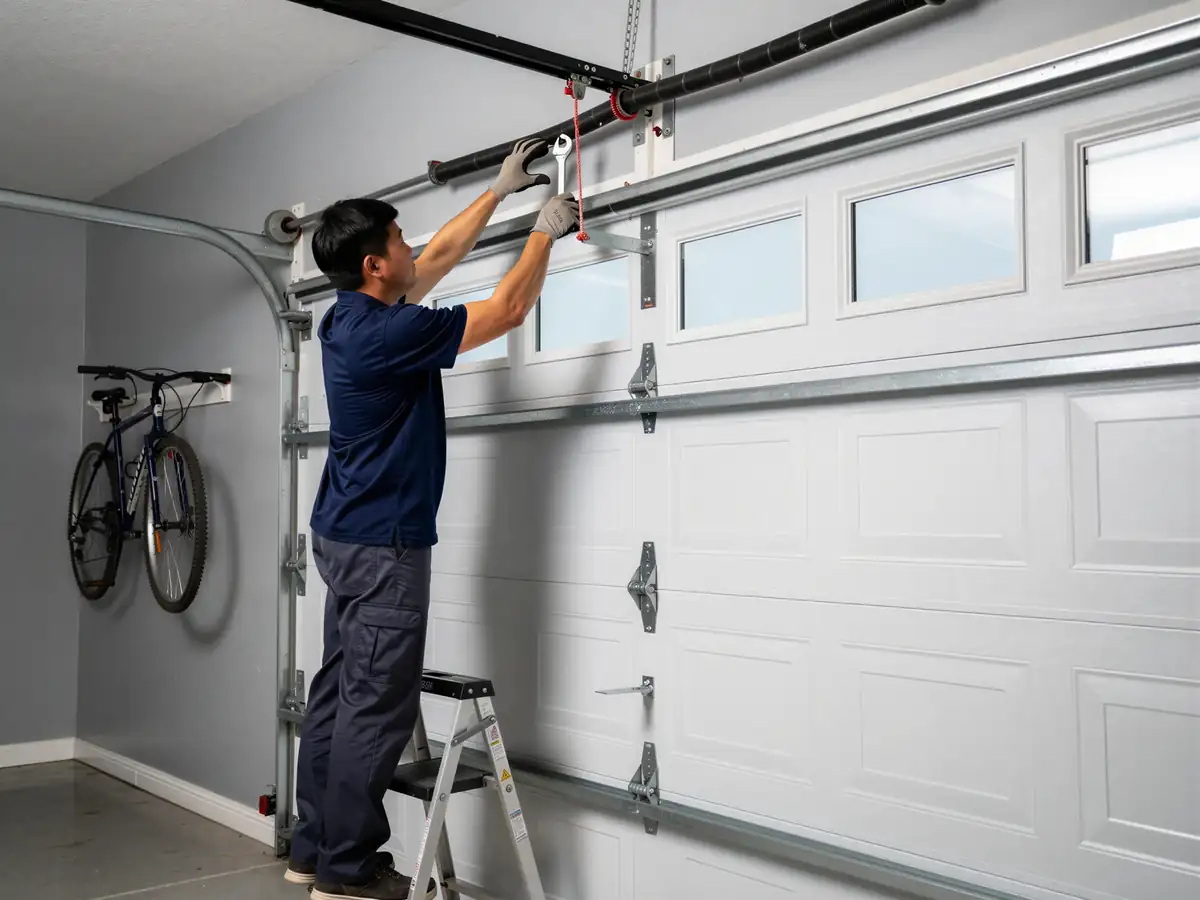
So the first thing to settle is what you're waiting on. A torsion spring snap or a cable that's jumped the drum usually means the door is stuck in whatever position it failed in - up, down, or crooked - until a tech gets eyes on it. At a median household income of $67,584 here, that repair-or-replace math matters more than it does in some of the wealthier pockets of the service area: a $200-$400 spring job on a door that's otherwise sound is worth doing, but sinking that same money into a door with a cracked panel and a worn-out opener on top of it usually isn't. We'll tell you straight which bucket your door falls into before any work starts, not after.
- 11 miles
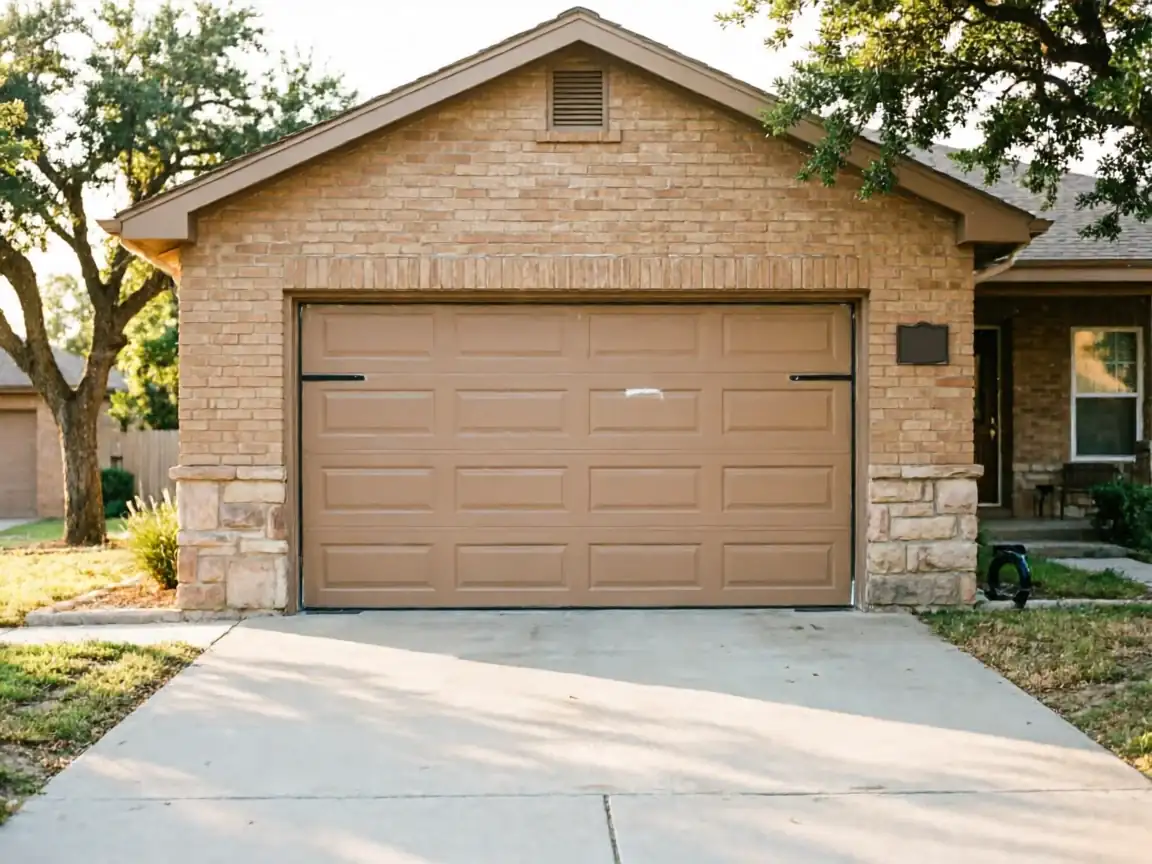
Most of Lancaster's housing stock went up around 1990
Which puts a lot of doors here into their third decade of hardware. That's old enough that original springs and rollers are past their rated cycle count, but not so old that parts are hard to find - this isn't a 1960s one-piece door with obsolete track. We carry what fits.
Can You Do This Yourself
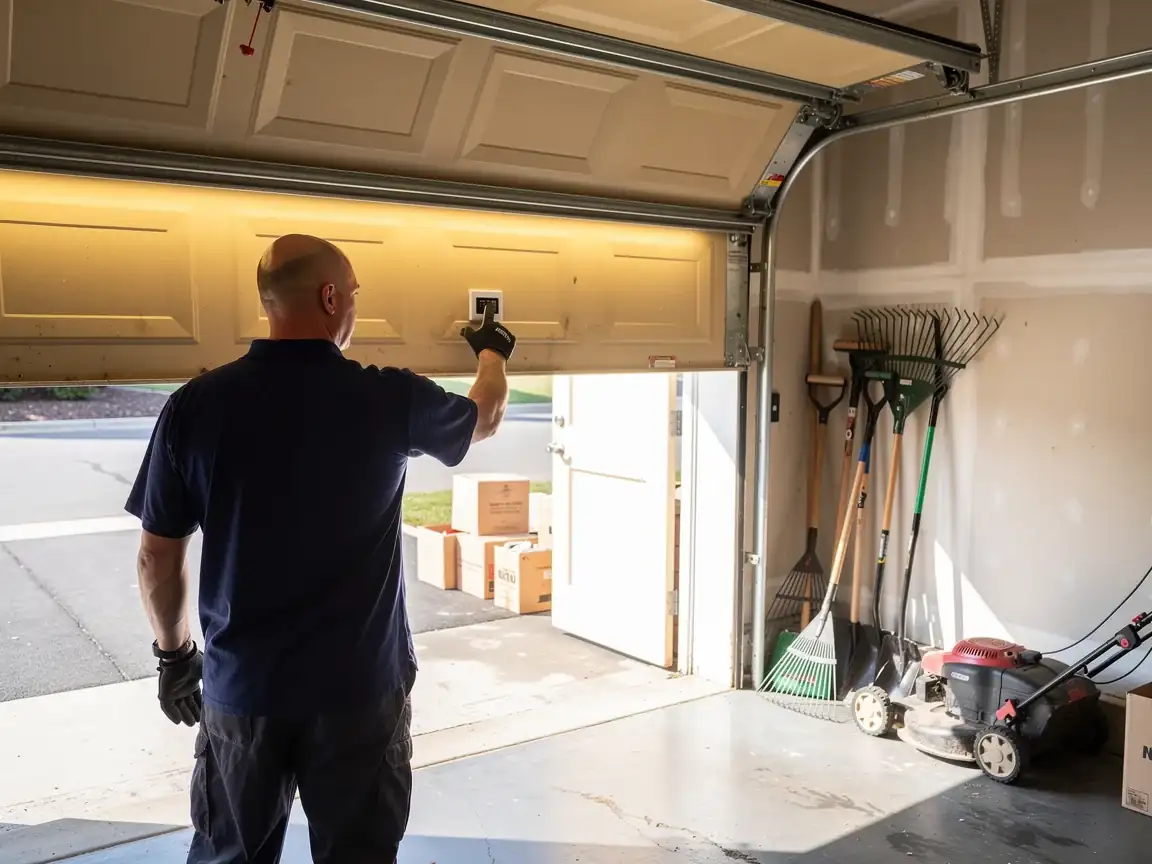
Some of it, yes. If the door won't open and the opener light is blinking a code, check the manual override first - a lot of 'broken' calls turn out to be a disconnected trolley or a sensor knocked out of alignment, both of which a homeowner can fix in five minutes with no tools. Lubricating hinges and rollers, tightening loose bolts on the track, replacing a worn weatherstrip - all fine to do yourself.
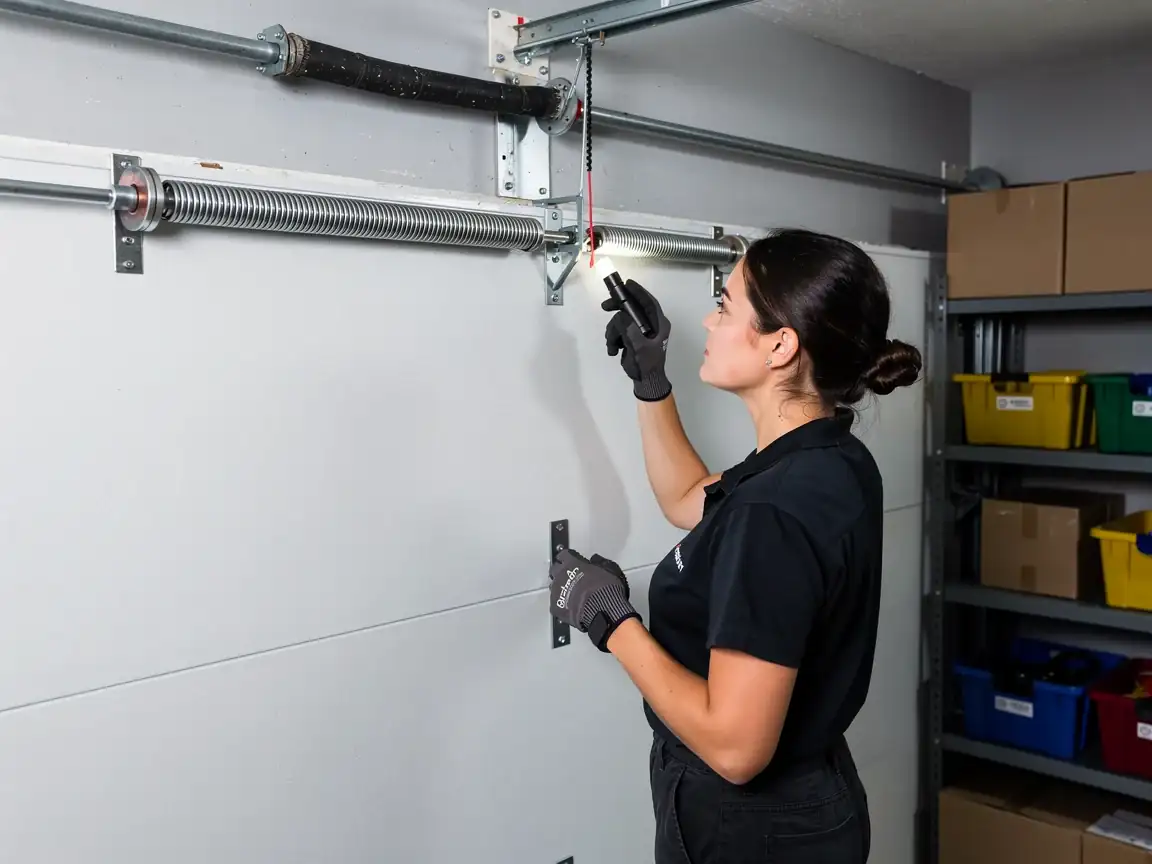
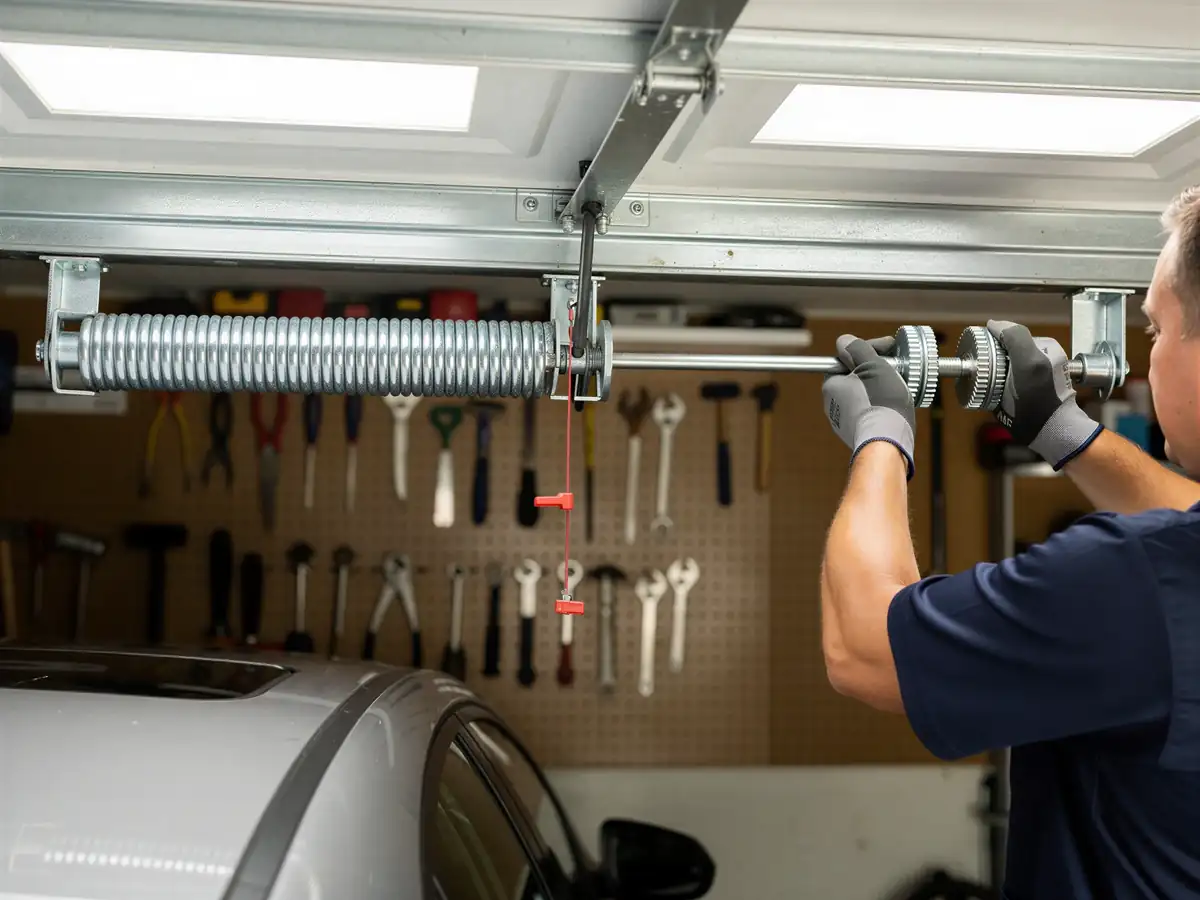
What we don't recommend you touch: the torsion spring itself. On a standard double door built in the 1990-ish range common in Lancaster, that spring is wound to roughly 30 turns of tension, enough to break a wrist or worse if the winding bar slips. Same goes for the cables under tension and anything involving the bottom bracket on a door that's already partway down. If the door is heavy, off-track, or the spring has visibly separated, that's a call, not a weekend project.
What Is on the Truck
We stock torsion springs sized for the standard 7-foot and 8-foot double and single doors that make up most of what went into Lancaster-area construction in the 1990s - that's the bulk of what we replace out here. Cables, rollers (steel and nylon), hinges, bottom seal, and the common safety-sensor and logic-board parts for the openers that shipped with houses from that build era are on the truck too.
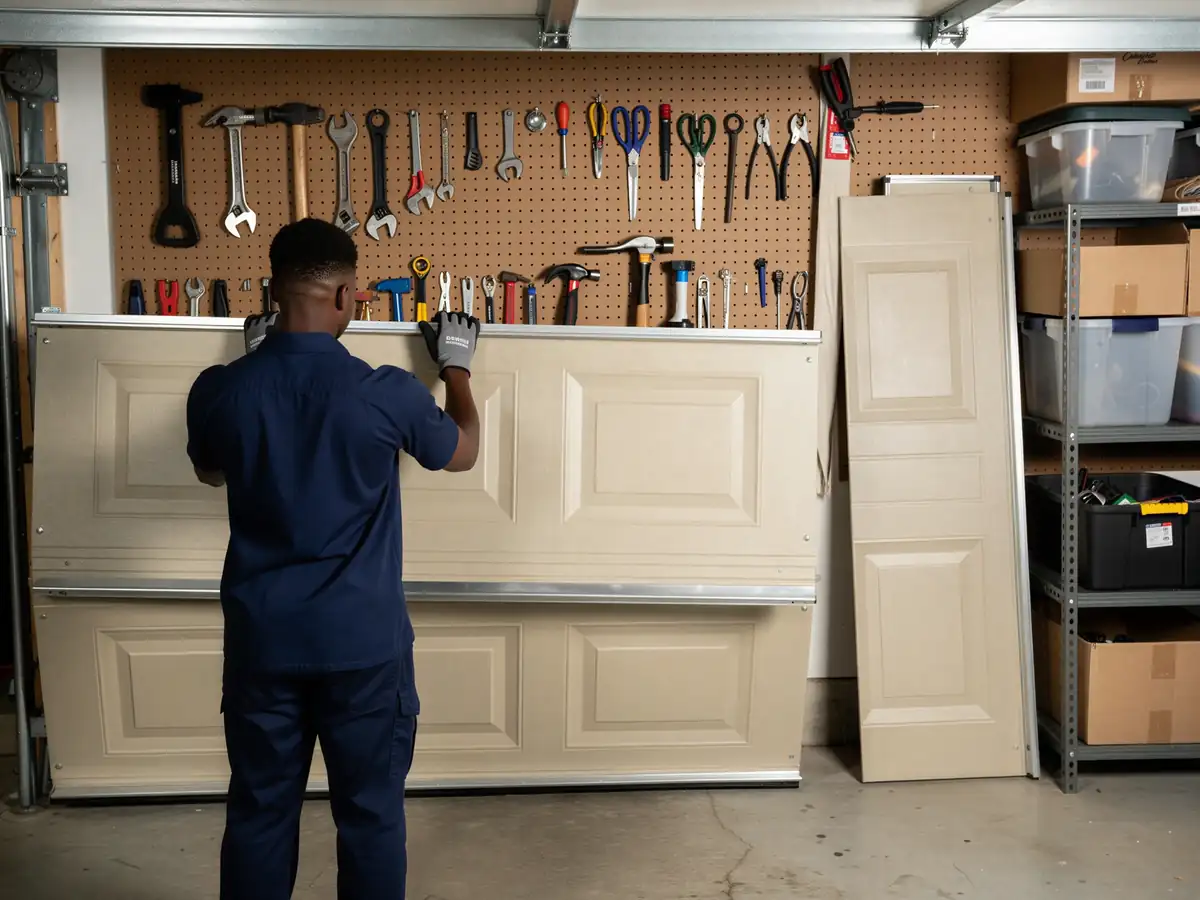
What isn't always on the truck: a specific color-matched panel for a door that's been discontinued, or a proprietary circuit board for an opener brand that's stopped making parts. Those sometimes mean a special order, and we'll tell you that up front rather than make you wait on-site for something we don't have.
How We Fix It
First the door gets inspected off the opener
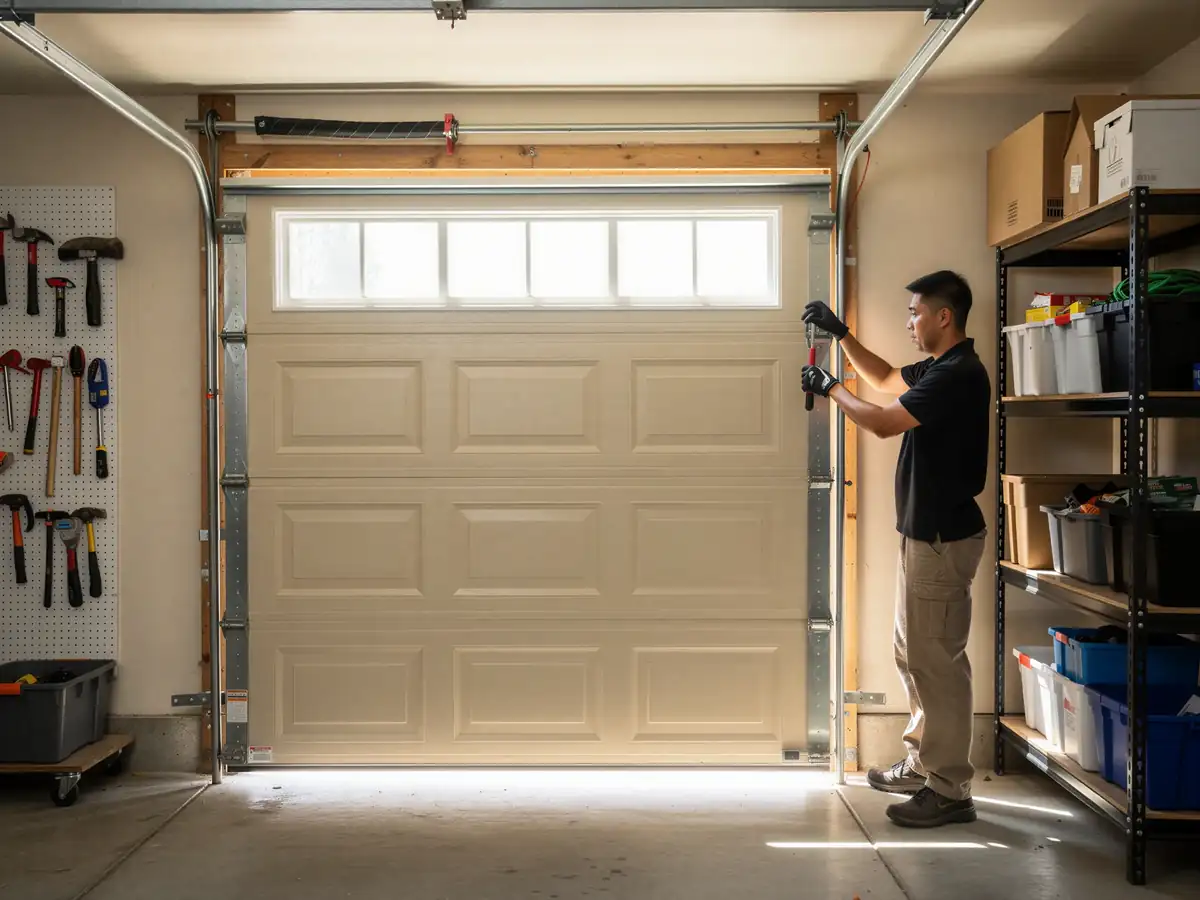
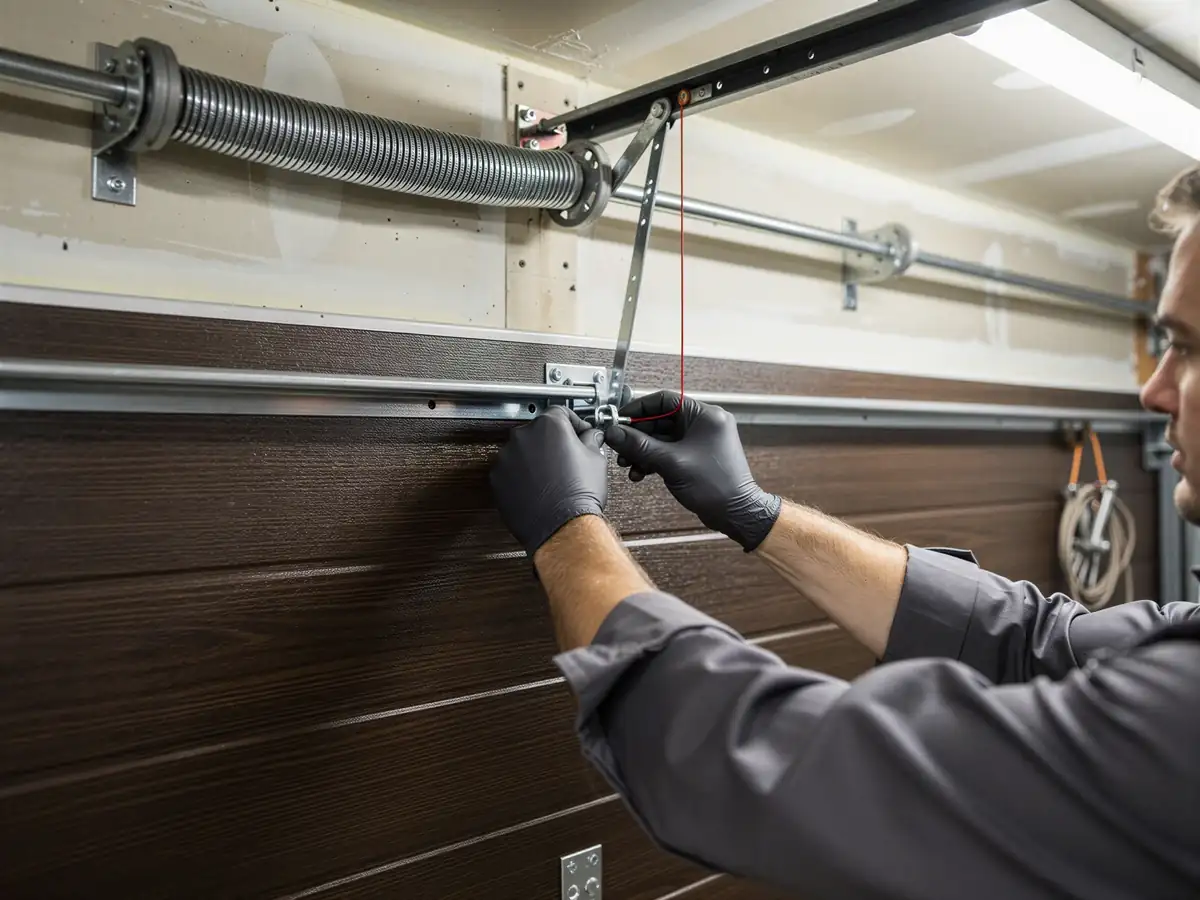
We disconnect it and move the door by hand to see if the problem is spring tension, a bent track, or the opener itself. That one step tells us most of what we need to know. A snapped torsion spring gets replaced in pairs even if only one side failed, because the other one is on the same cycle count and close behind. Cables get swapped at the same time if they're worn, since the labor to get back up there twice costs more than the part.
If the opener is the problem
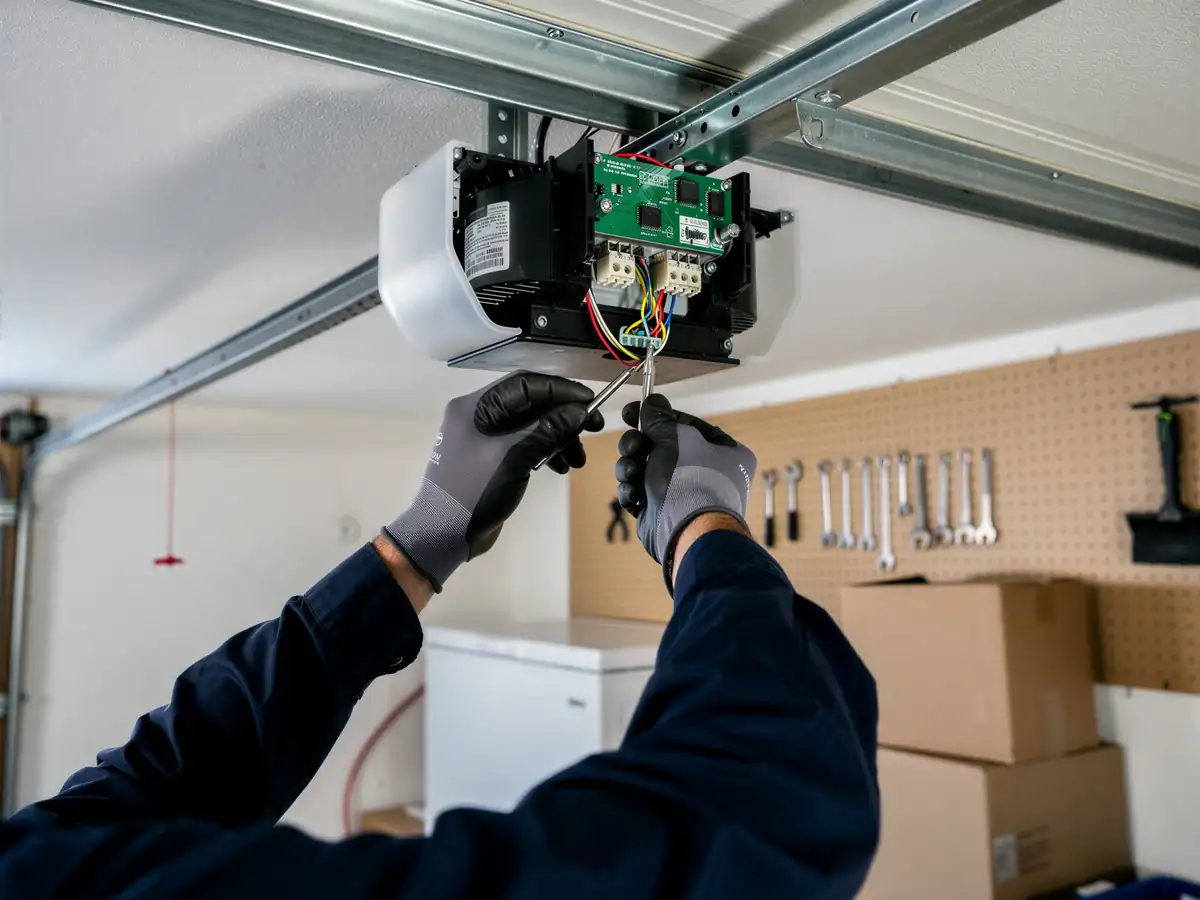
A logic board that's stopped reading the remote, or a motor that's drawing power but not moving the door - we test the sensors and the wiring before assuming the motor's dead. A lot of 'opener is broken' calls on 30-year-old units turn out to be a $30 sensor, not a $300 motor.
The Symptom
The most common emergency call out of this part of the service area is the door that won't move at all, paired with a loud bang or pop that the homeowner heard right before it stopped - that's almost always a torsion spring letting go. Second most common: the door reverses itself a few inches off the ground and goes back up, which usually means a sensor is misaligned or the travel limits on the opener have drifted, common on units that have been running since the house was built around 1990.
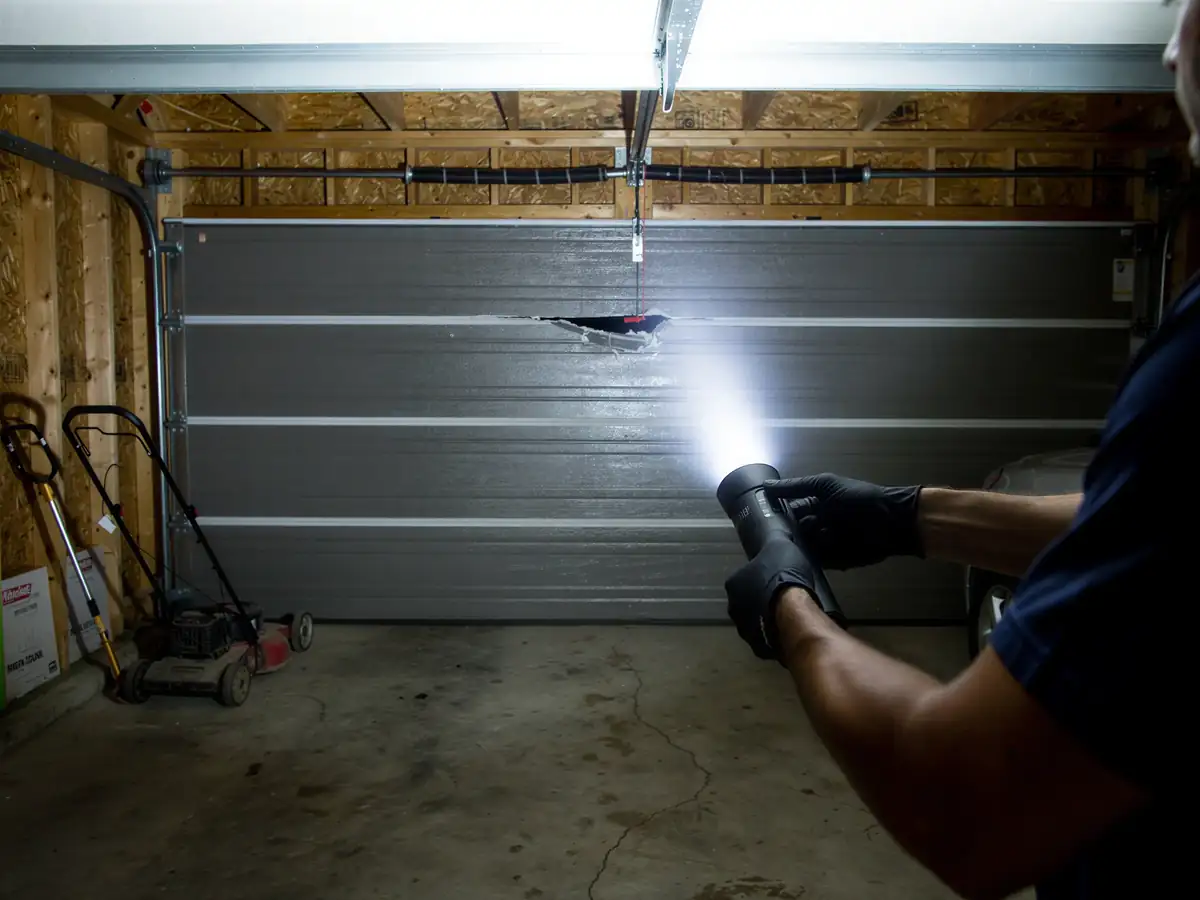
Less common but not rare: a cable that's frayed and finally snaps, which can leave one side of the door hanging lower than the other. If you see that uneven hang, stop trying to operate the door by remote or by hand - the off-balance weight is what causes the track to bend.
What Can Go Wrong
A spring replacement that should take an hour can turn into a longer job if the drums or the shaft are worn from running on a spring that was already failing for weeks before it snapped - that's more common on older openers that masked the grinding noise. We'll flag that before we quote it as a straight swap.
The honest limit here: if your door was manufactured by a brand that's since gone out of business, or the panel style was discontinued years back, we may not be able to match it exactly, and a full replacement becomes the more practical answer even if the spring itself would've been a quick fix. We'd rather tell you that than sell you a mismatched panel.