Can You Do This Yourself
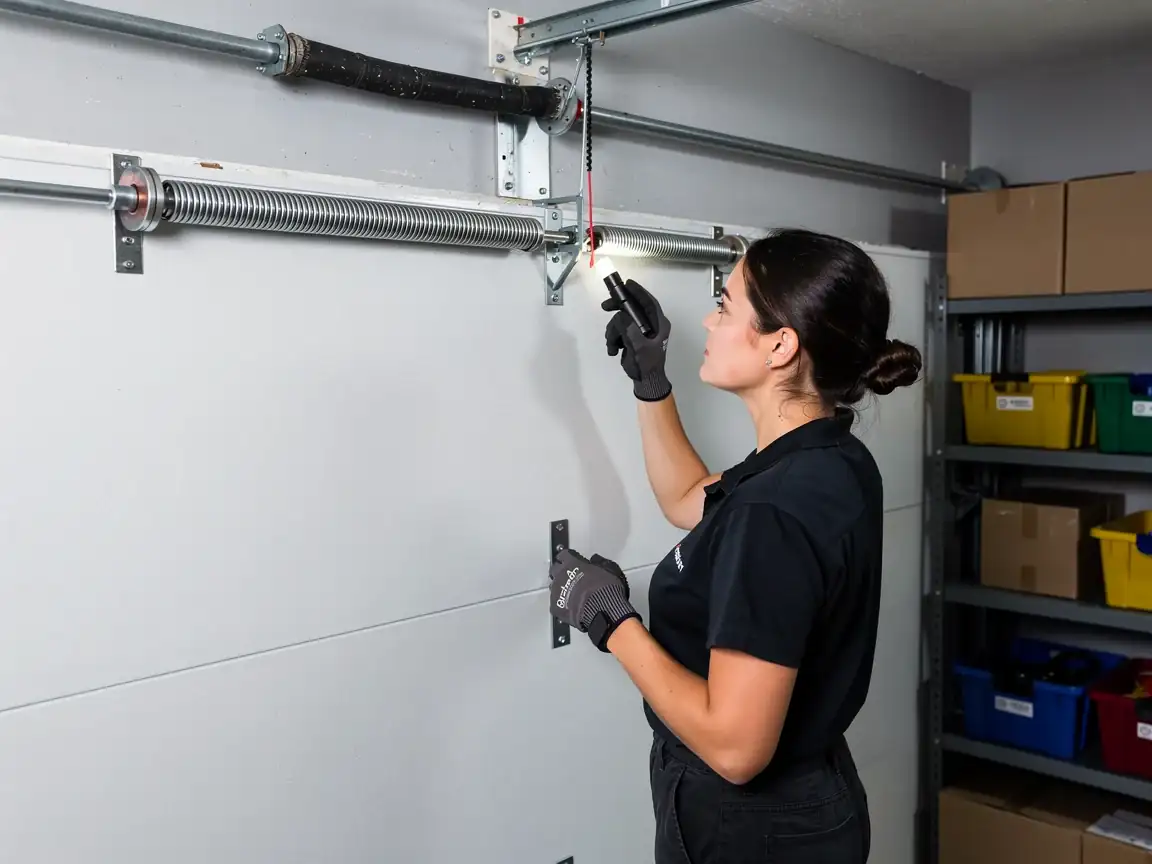
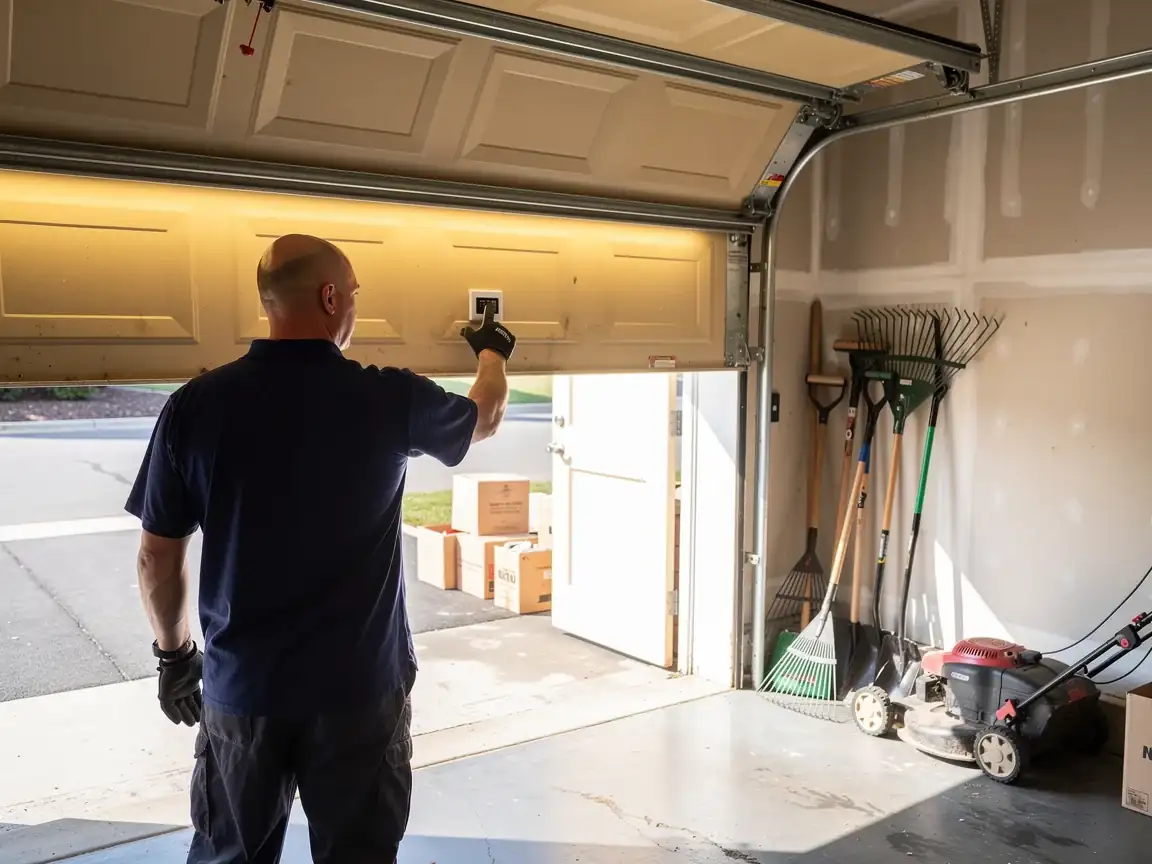
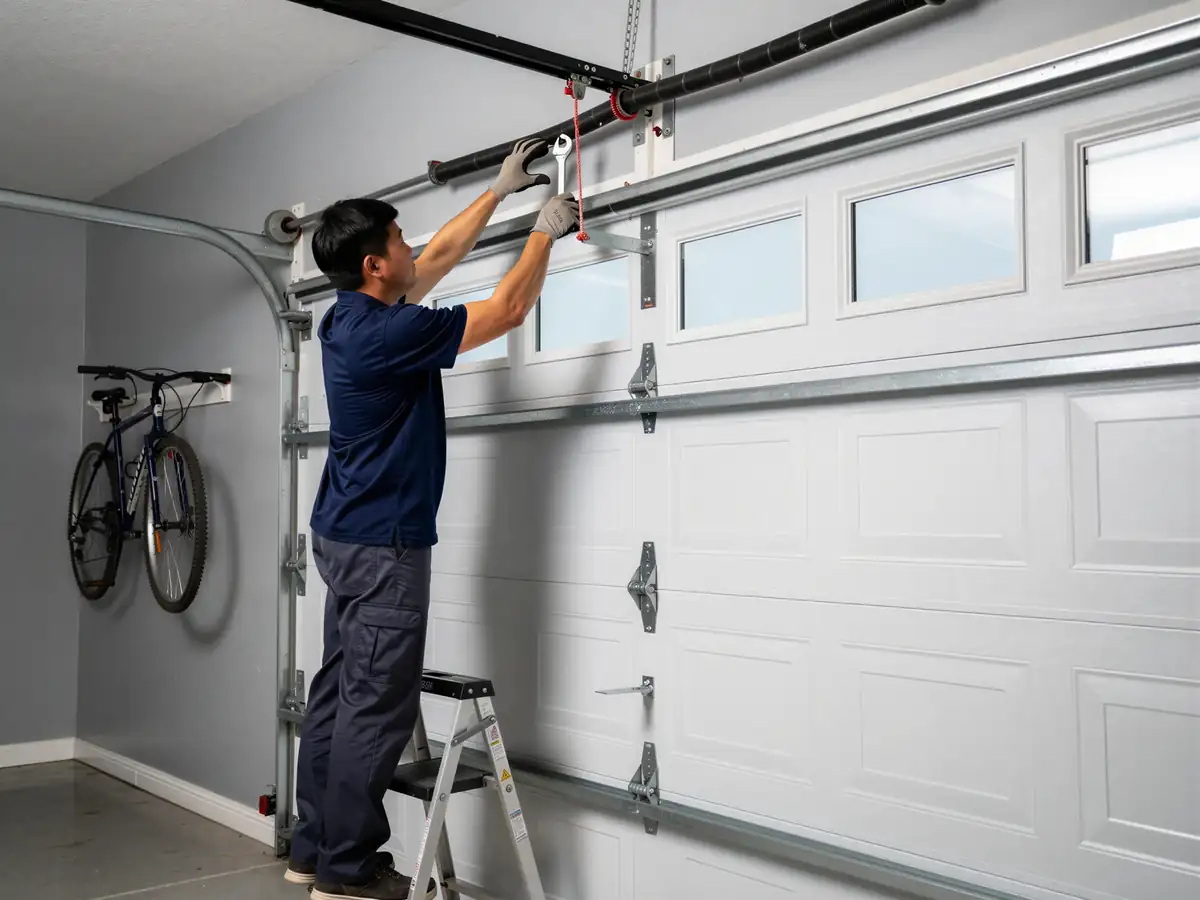
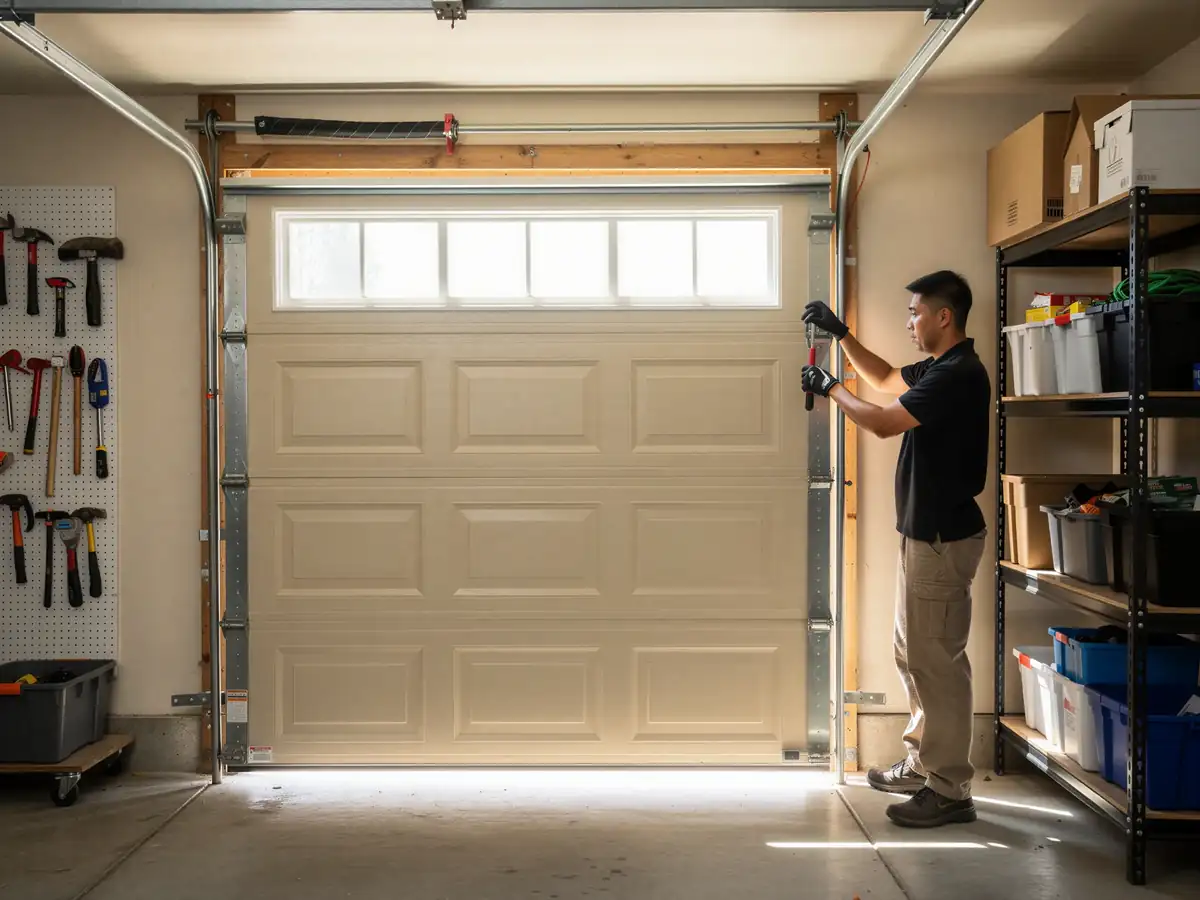
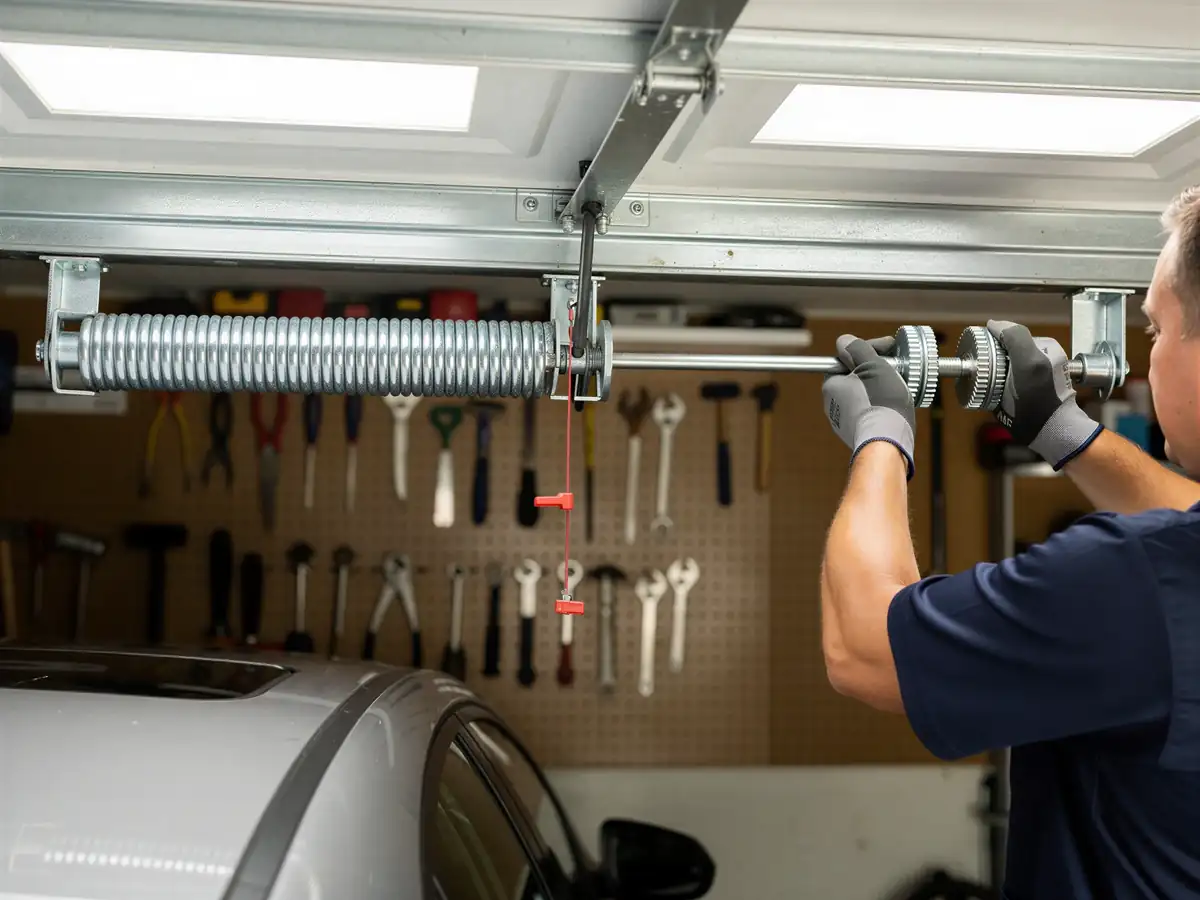
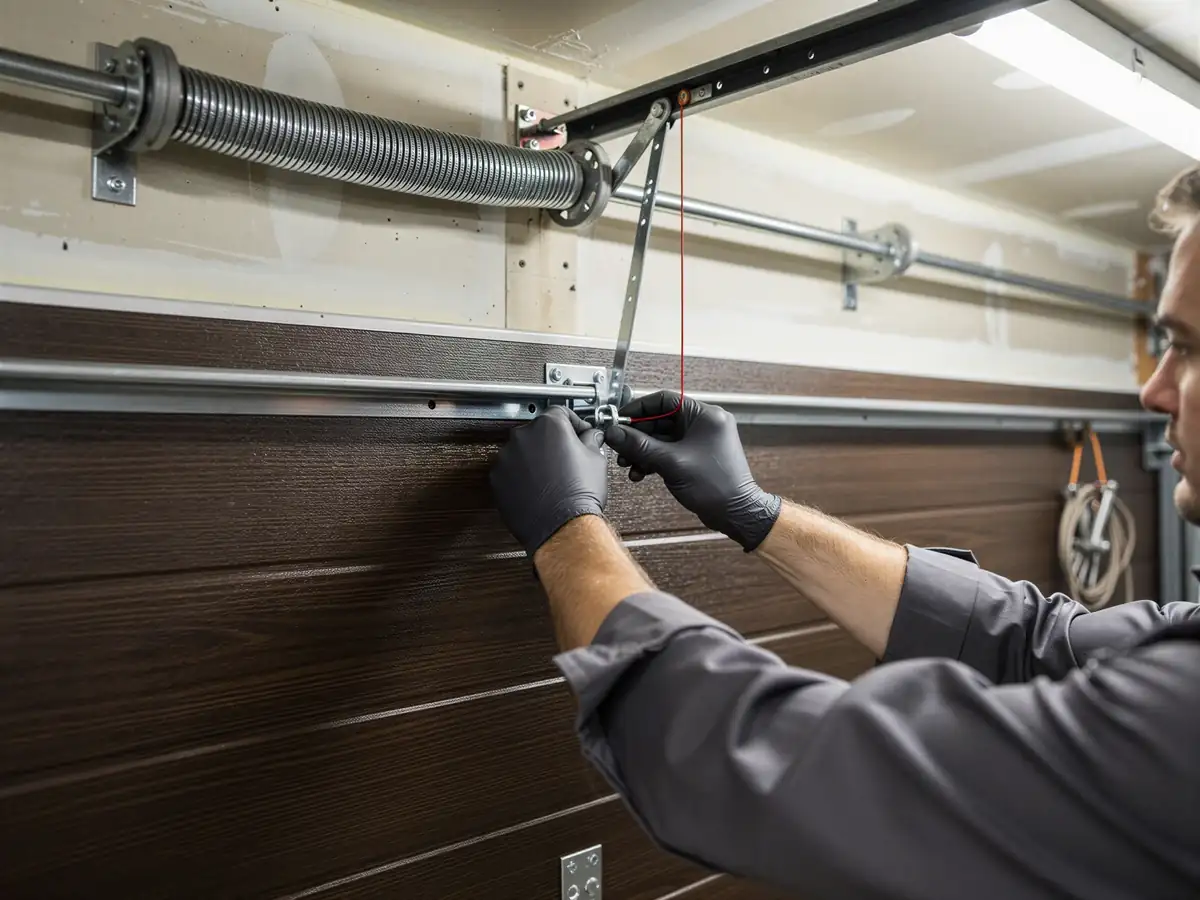
You can grease a hinge and wipe a track yourself, no argument. What you can't easily check from a stepladder is spring tension and cable wear, and on a house built around 1990 - which describes most of Lancaster's stock - that spring has likely seen three decades of cycles. A torsion spring at the end of its life doesn't always squeal first; sometimes the door just gets heavy, then one day it doesn't. Checking balance means disconnecting the opener and lifting the door by hand to see if it holds at waist height on its own. If it drops or shoots up, the spring is out of adjustment and that's not a DIY fix - torsion springs are under enough load to break fingers. Lubrication, tightening visible bolts, and watching for frayed cable strands are fair game for a homeowner. Spring adjustment and cable replacement are not.
What Is on the Truck
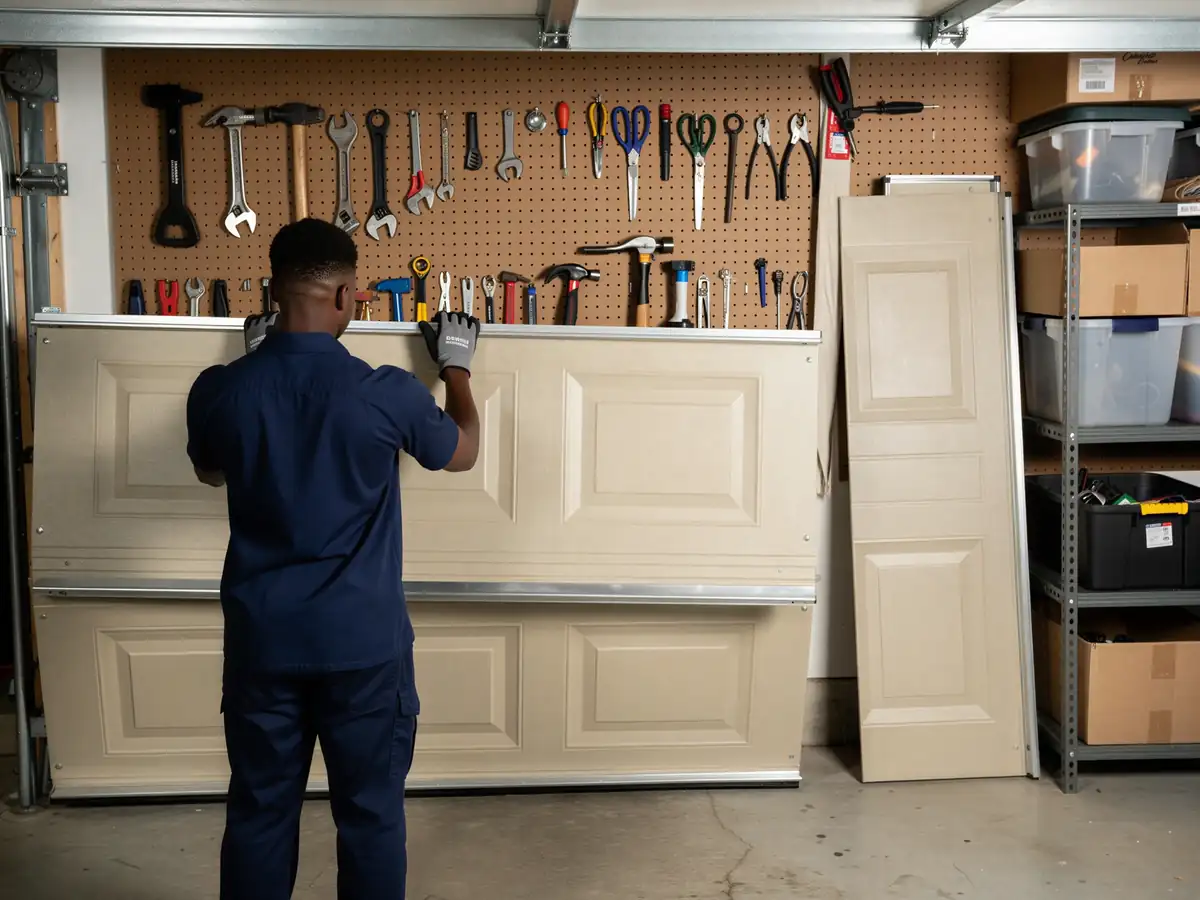
For a maintenance stop we carry the same basics regardless of the address: lithium-based grease (not WD-40, which strips grease rather than adding it), replacement rollers in steel and nylon, torsion spring winding bars, a tension gauge, and hardware for track and hinge fasteners that rust loose over time. Given Lancaster's building stock runs through the 1969-2014 range with the bulk centered near 1990, we also carry parts sized for the older torsion setups common to that era - not the newer direct-drive hardware you'd find on anything built after 2010. We don't stock every panel style on the truck; if a section is cracked or dented beyond a simple repair, that part gets ordered after the visit, not pulled from inventory on the spot.
The Symptom
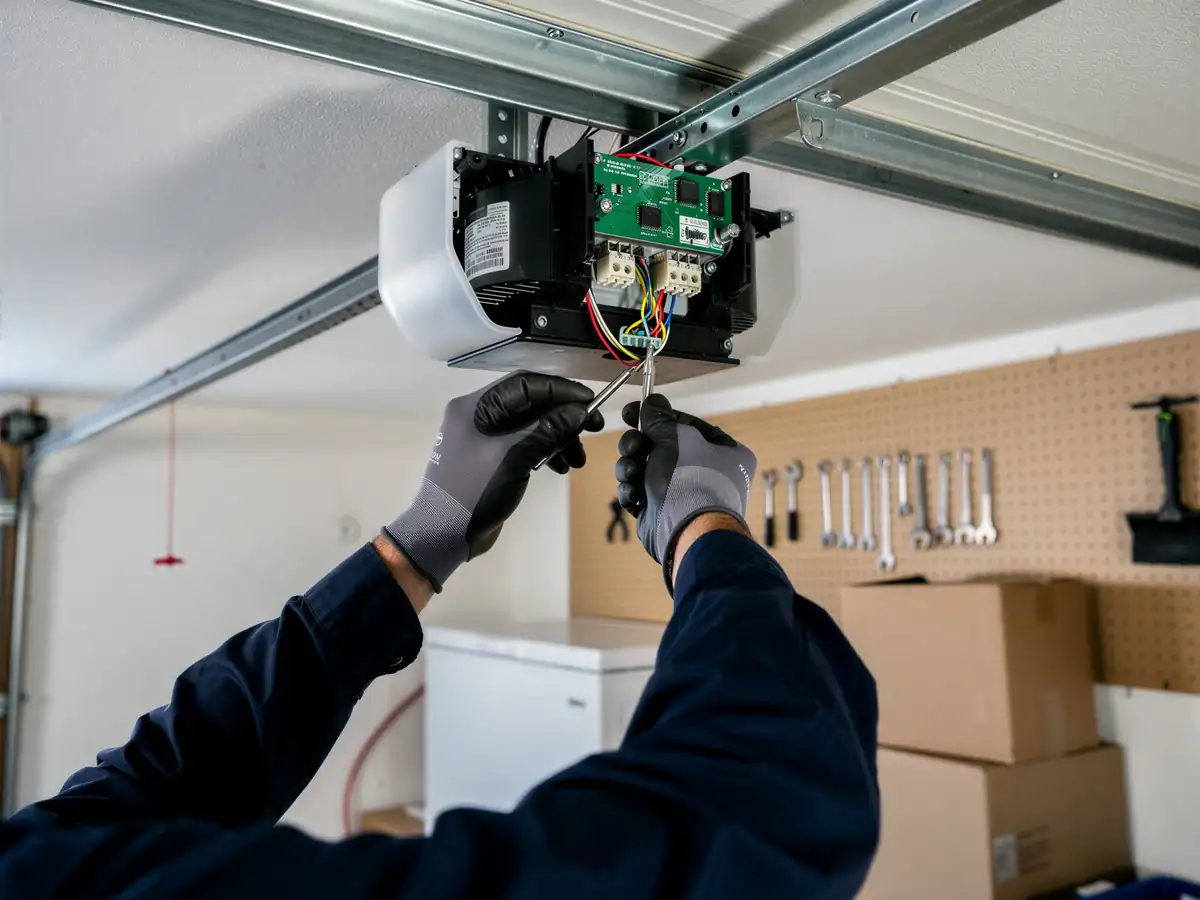
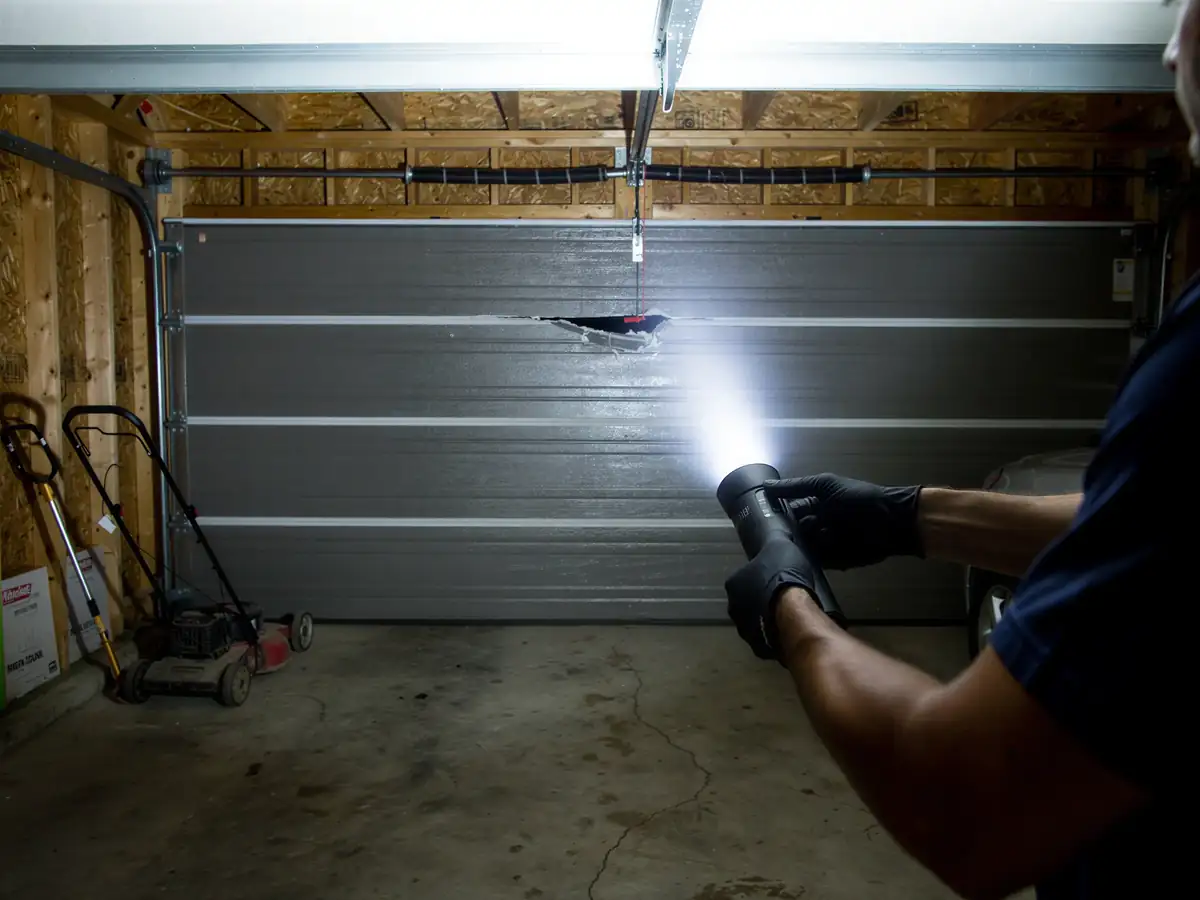
The complaint we hear most from this area is a door that's gotten noticeably heavier to lift by hand, or an opener that strains and reverses partway up. Both point to the same root cause on a house this age: a torsion spring that's lost tension gradually, cycle by cycle, until the opener is doing work it wasn't built to carry long-term. Grinding or popping sounds from the spring area are a second common call, usually dry bearings or a worn roller rather than the spring itself. A door that reverses right after the floor without an obstruction usually means the limit switch or the sensors need a look, not the spring.
What Can Go Wrong
Left alone, a spring losing tension puts more strain on the opener's motor and gears, which is a more expensive part to replace than the spring would have been. Dry, rusted rollers wear grooves into the track over time, and once the track itself is grooved, lubrication stops helping - you're into a track replacement instead of a ten-dollar part. On the income side, Lancaster's median household income runs lower than some neighboring areas in the service region, which is worth naming because it's the reason we try to catch a spring early rather than let it become a full opener replacement. A $67,584 median household budget has less room to absorb a surprise four-figure repair than it does a scheduled maintenance visit.